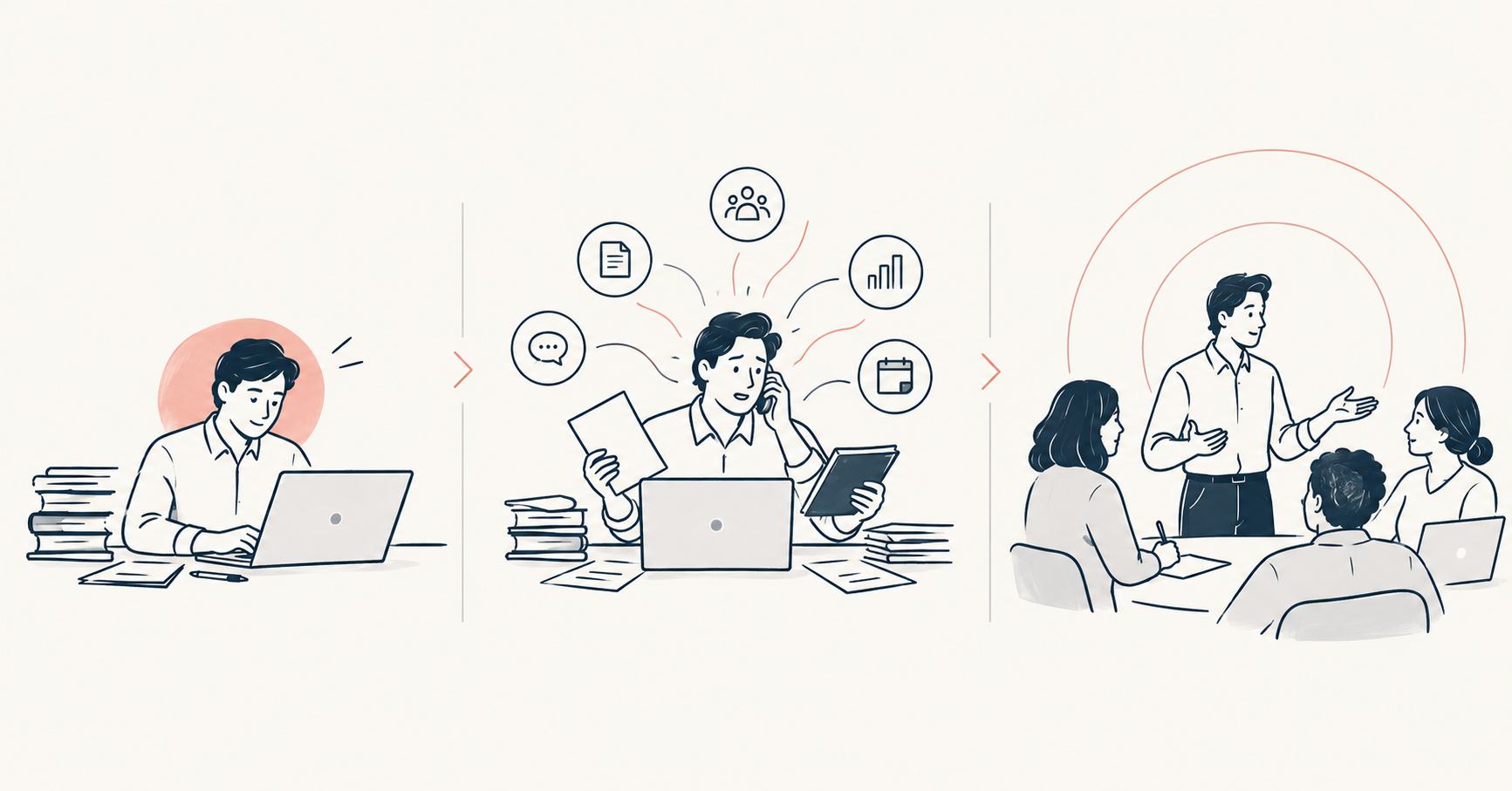
A promotion into management often makes perfect sense on paper. Someone knows the work. They perform consistently. People trust them. They solve problems, take responsibility and get things done. So the next step seems obvious: give them a team.
Then, sometimes, the person who was excellent at the job begins to struggle. Not because they suddenly became less capable. The job itself changed.
The skills that earned the promotion are not always the skills the new role needs
As an individual contributor, good performance is often fairly direct. You are responsible for your work, your decisions and your output. Management changes that equation. Now, a large part of your effectiveness depends on what other people are able to do.
You have to set expectations clearly. Delegate work you could probably do yourself. Give feedback. Deal with underperformance. Make decisions that affect other people. Handle disagreements. Keep a team moving when priorities change. And you have to do all of that while still being accountable for the result. That transition can be uncomfortable, especially for someone who built their reputation by being dependable and hands-on.
Doing the work yourself stops being the answer
One of the easiest traps for a new manager is to keep operating like the employee they used to be. A deadline is getting close, so they take over. Someone is struggling with a task, so they fix it themselves. A decision needs to be made, so they provide the answer immediately.
In the short term, this can feel efficient. The manager knows the work and can probably get it done faster. But over time, the team learns something unintended: when things get difficult, the manager will step in. The manager becomes busier. The team becomes more dependent. Development slows down.
Good management often requires resisting the urge to be the person with all the answers. Sometimes the better question is:
“What does this person need from me to handle this themselves?”
Delegation is harder than simply handing work over
Delegation sounds straightforward until you have to do it well. It is not just assigning a task and walking away. A manager has to decide how much direction someone needs, what a good outcome looks like, what decisions they can make themselves and when to check in.
Too little guidance can leave people guessing. Too much can feel like micromanagement. New managers often swing between the two because nobody has helped them work out what useful delegation actually looks like.
The aim is not simply to get work off the manager’s desk. It is to give someone enough clarity and ownership to do the work well — and eventually need less help doing it.
The conversations become different
Colleagues who were previously peers may now report to you. Someone you like personally may be underperforming. A strong employee may disagree with your decision. A team member may expect an opportunity you cannot give them.
These are no longer just operational problems. They are conversations involving expectations, trust, emotion and sometimes disappointment. And avoiding them rarely makes them disappear.
A manager does not need to become cold or confrontational. But they do need to become comfortable saying things that may be uncomfortable to hear. Clear management is often kinder than prolonged ambiguity.
Being liked and leading well are not always the same thing
Many new managers understandably want a good relationship with their team. The difficulty comes when being liked starts influencing decisions that should be based on what the team needs.
Expectations stay vague because the manager does not want to sound demanding. Feedback gets softened until the real message disappears. Poor behaviour is tolerated because addressing it feels awkward. None of this usually comes from bad intentions. It comes from learning that leadership occasionally requires tension.
People do not need a manager who creates unnecessary conflict. But they do need one who is willing to address what matters.
New managers are learning a new profession
This is easy to underestimate. We would not expect someone to become competent in finance, design or engineering simply because they were promoted into the department. Yet organisations often promote someone into management and assume they will work it out. Some do. Others learn through years of avoidable mistakes.
A better approach is to treat management as something that can be developed deliberately. That means helping managers learn how to:
- set clear expectations and direction;
- delegate without disappearing or micromanaging;
- give useful feedback;
- manage performance and accountability;
- handle difficult conversations;
- make the shift from solving every problem themselves to developing the people around them.
None of these skills require a manager to become a completely different person. They require them to become more intentional about how they work through other people.
The promotion should not be the end of the development
Promoting a good employee is an investment. But the promotion itself does not complete the transition.
The strongest organisations recognise that someone becoming a manager is entering a new stage of development. They give them room to learn, opportunities to practise and support for the situations that are difficult to learn from a slide deck alone.
Because the goal is not simply to create more managers. It is to help good people become capable leaders of other people.